

Artificial intelligence, or AI, is one of those terms people hear all the time and often understand in completely different ways. For some, it means ChatGPT. For others, it means robots, automation, or a future that feels either exciting or unsettling.
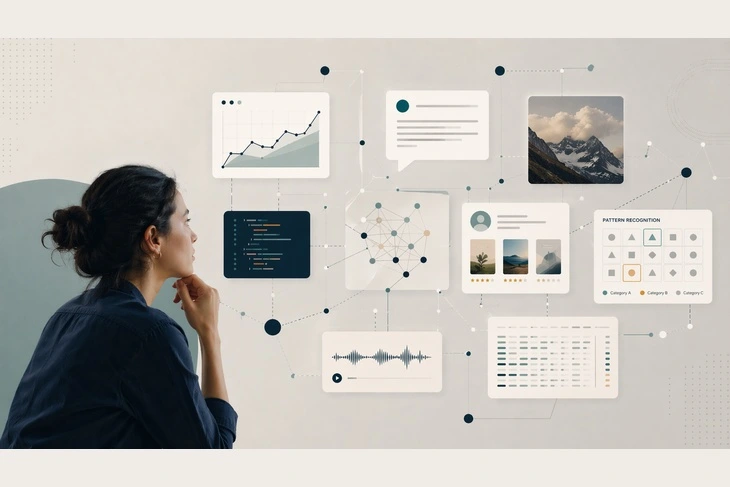
Image created with ChatGPT by OpenAI
AI is a broad term, not a single tool
But AI is not one single tool, and it is not magic. It is a broad term for technologies that use data to identify patterns, generate outputs, and support tasks such as prediction, language processing, recommendation, and content creation.
At its core, AI works by taking in data, identifying patterns, and producing an output. That output might be a recommendation, a prediction, a classification, a translation, or a generated response. In some cases, AI helps identify whether an X-ray shows signs of disease. In others, it helps predict what word is most likely to come next in a sentence. Generative AI goes a step further by producing new content, such as text, images, audio, or code.
Why AI can sound smart without actually understanding
This is where many people get confused. AI can sound fluent, fast, and confident, especially in chatbot form, but that does not mean it thinks the way humans do. Many modern AI systems, especially generative AI tools, work by identifying patterns in data and producing likely outputs. That is very different from human understanding, judgment, or lived experience.
Most people already use AI, even if they do not always notice it. It appears in search engines, recommendation systems, spam filters, voice assistants, automated translation, photo tools, content moderation systems, and increasingly in workplace software. The question is no longer whether AI exists in everyday life. It already does. The bigger question is whether people understand what it is doing, where it helps, and where it can mislead. The OECD also frames AI as a major force with both benefits and risks. OECD: Artificial intelligence.
And yes, AI can mislead. These systems can make mistakes, reflect bias, produce false information, or sound more certain than they should. In the case of generative AI tools, one of the best-known risks is hallucination, when the system produces content that sounds plausible but is inaccurate or invented. That is why AI should not be treated as an authority just because it sounds polished.
What is the difference between AI, machine learning, and generative AI?
It also helps to separate a few terms that are often mixed together. AI is the broad category. It includes many different kinds of systems designed to perform tasks such as pattern recognition, language processing, recommendation, and decision support.
Machine learning is one part of AI. It refers to systems that learn from data instead of following only fixed, hand-written rules. Machine learning is a subfield of artificial intelligence, and it powers many of the AI tools people use today.
Generative AI is a type of AI, often built using machine learning, that creates new content rather than simply sorting, predicting, or classifying existing information. It can generate text, images, audio, video, or code.
A simple way to think about it is this: AI is the big umbrella. Machine learning is one major part of that umbrella. Generative AI is one type of AI that creates new material.
So when people say "AI," they may be referring to many different things. Sometimes they mean recommendation systems. Sometimes they mean fraud detection. Sometimes they mean ChatGPT or image generators. That is exactly why being specific matters.
Why AI literacy matters now
This is also why AI literacy matters. AI literacy is not about turning everyone into an engineer. It is about having enough knowledge to use AI in an informed way, recognize both its opportunities and its risks, and understand where harm can occur. The European Commission's guidance on AI literacy says providers and deployers of AI systems should ensure a sufficient level of AI literacy among staff and others dealing with those systems on their behalf.
AI is not a human mind. It is not pure automation. And it is not one single thing. It is a broad set of technologies that can recognize patterns, process information, and generate outputs that may appear intelligent, useful, or convincing. Sometimes they are. Sometimes they are wrong. The difference often depends on the data, the design, the context, and the human judgment around them.
One thing to remember: AI can be powerful, but understanding its limits is just as important as understanding its capabilities.
In one sentence: AI is a broad term for technologies that use data to identify patterns and produce outputs such as predictions, recommendations, decisions, or new content.
About The Author

Branislava Lovre
Branislava Lovre works with media organizations, CSOs, and institutions to implement ethical AI in practice, delivering hands-on training, strategic guidance, and keynote talks on responsible AI adoption.
Branislava Lovre
Branislava Lovre works with media organizations, CSOs, and institutions to implement ethical AI in practice, delivering hands-on training, strategic guidance, and keynote talks on responsible AI adoption.





Leave A Comment